|
Emotional competency works; it is good for business, it strengthens relationships, improves wellbeing, and it can even save lives. The pain and suffering caused by emotional incompetence is huge and incalculable. We have included stories here as examples of the many tragedies that could have been prevented by emotionally competent behaviors. Although the losses represented by these stories are huge, the peace of mind that is lost each day by so many people may represent an even greater loss. The following stories clearly show the great need to improve our emotional competency. Studying and applying the principles of emotional competency can improve our emotional wellbeing. The need is both urgent and imperative. Please send us your stories.
Road Rage
On November 27, 1996 in Cincinnati Ohio, Tracie Alfieri, a 24 year old mother of two, is alone driving northbound on Interstate 71 in a GrandAm. She is following 29-year old Rene Andrews who was driving a VW. In front of them are several cars behind a truck going 35 mph. Perhaps because she felt entitled to drive faster on the highway, Tracie pulls her GrandAm into the left lane to pass the line of cars and immediately speeds up to 55 mph. Suddenly and unexpectedly Rene pulls her VW out into the left lane, in front of the GrandAm, going 20 mph slower and forcing Tracie to suddenly apply her GrandAm’s brakes. Rene’s provocative maneuver suddenly creates a dangerous incident and was done deliberately to annoy the GrandAm driver for tailgating her. It's an aggressive act, directly challenging Tracie who was already engaged changing lanes with her GrandAm. Rather than exercising the social skill of backing down from a challenge, of being less competitive, and intending to facilitate rather than oppose what other drivers want to do, Rene engaged in a power struggle with Tracie.
Rene’s VW gradually overtakes the slow truck, passes it, and pulls back into the right lane. Tracie’s GrandAm, still in the left lane, now overtakes the VW, honks several times, makes obscene gestures, and flashes her lights as signs of outrage “to let her know that she almost caused an accident just then”. Tracie did not exercise self-control by refusing to fan the flames of her righteous indignation. She did not resist the temptation to teach other drivers a lesson. She did not value Rene as a fellow human and resist the impulse to retaliate. Instead she chooses to continue their open duel on the road as she seeks revenge.
Rene continues the duel and responds from her VW by flipping the bird and shaking her head. Rather than defusing the situation, she continues to be drawn into the duel. She missed this opportunity to “come out swinging positive” by appearing to be calm, like she was no longer taking a fighting stance. She did not exercise the social skills of switching to a non-confrontational posture, and of rationally predicting the consequences of this quickly escalating road rage.
Tracie in her GrandAm now tries to pull ahead in the left lane to re-enter the right lane, but then Rene accelerates her VW, blocking the way and casting the die for tragedy. Both drivers are now locked into a pathological and deadly game. Neither realizes how far their emotional responses are obscuring their rational choices. Neither driver recognizes they are in an insane power struggle that they need to back out of immediately.
Having no choice, Tracie is forced to back off momentarily. She slows down her GrandAm and pulls in behind Rene’s VW, but she hasn't calmed down. She does not choose to use this lull to back out of the fight and calm down. Instead, she chooses to use her experience as a driver to wage war, she continues the escalation, and now keeps up the pressure by tailgating dangerously.
Tracie suddenly pulls her GrandAm out into the left lane again, overtakes and cuts off the VW, then gives a “brake job,” slamming on the brakes to in an attempt to punish Rene driving the VW behind her. Not realizing that anger escalates anger and aggression escalates aggression into tragedy she’s no longer just getting even. She started out by getting upset that Rene almost caused an accident with her VW, but has now created a major battle.
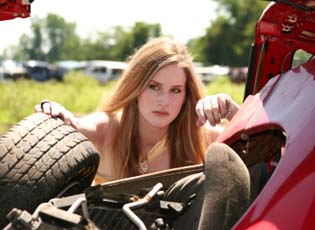 Rene applies her VW brakes suddenly and they lock, causing her to veer sideways to the right where she hits a truck parked on the shoulder. She is thrown from the car, badly injured, and taken to the hospital where she recovers from surgery. Tragically she is 6-months pregnant and her unborn child dies. She started out nearly causing a crash by pulling out in front of the GrandAm. Instead of pacifying Tracie, Rene flipped her “the bird”, and ended up losing her own baby. Rene applies her VW brakes suddenly and they lock, causing her to veer sideways to the right where she hits a truck parked on the shoulder. She is thrown from the car, badly injured, and taken to the hospital where she recovers from surgery. Tragically she is 6-months pregnant and her unborn child dies. She started out nearly causing a crash by pulling out in front of the GrandAm. Instead of pacifying Tracie, Rene flipped her “the bird”, and ended up losing her own baby.
Tracie continues to drive her GrandAm to the office where she showed no remorse and bragged about what she did. She told her supervisor that she'd been in an accident, that “the other driver had it coming” and that “she wasn't going to take s**t from no one.” Later, she was arrested and charged with vehicular homicide for causing the death of an unborn child.
Her supervisor’s testimony is one factor that contributed to the trail jury’s decision to convict Mrs. Tracie Alfieri of aggravated vehicular homicide and aggravated vehicular assault. She was sentenced to a one-and-a-half-year prison term.
World wide, about 1.5 million people are killed in road accidents every year. In the U.S. more than 42,000 traffic fatalities occur every year along with about 6.5 million injuries at a total annual economic cost of $200 billion. According to the US department of transportation, 42,636 people lost their lives in motor vehicle crashes in 2004. The human cost is incalculable. How much could have been saved if they had only chosen another path out of their anger?
Road accident research points towards driver error in the majority of cases. As the example illustrates, emotional incompetence is a major contributing cause of driver error resulting in these enormous human and economic losses. But death and destruction from road rage is not the only cost of emotional incompetence.
Sports Events
The highways are not the only place where anger escalates into deadly violence. Sports events often provoke players, fans, and friends to display uncontrolled anger, aggression, and often violence. Ice Hockey can be a particularly violent sport. Body-checking—blocking or impeding an opponent, using either your own body or stick—is an often violent and important tactic permitted in professional games as well as games played at several amateur levels.
On July 5, 2000, truck driver Thomas Junta dropped his 10-year old son Quinlan and two other playmates off at the Burbank Ice Arena in Reading Massachusetts. Quinlan and the other boys were wearing full protective ice hockey gear and carrying hockey sticks. Junta returned several hours later to pick up the boys. When he entered the arena, he saw the boys were scrimmaging with other young players, including the three sons of Michael Costin, a 40-year old part-time laborer. Costin was acting as the informal referee of the scrimmage. Junta was upset by the roughness of the play and noticed that “They were hitting each other, cheap shots the whole way . . . Mainly the other kids—not our kids. Our kids were just, like retaliation things.” Perhaps because he felt his son was entitled to practice hockey without being checked, Justin then ran to the door of the rink and yelled, “None of that cheap bullshit. This is supposed to be fun Hockey.” Defending the boy’s actions and dismissing Justin’s complaint, Costin then replied “That’s Hockey”.
A few minutes later another boy knocked Quinlan in the face. “I seen my son holding his neck and his face, and he gets off the ice, and he’s in the locker room crying,” said Junta. “I told him, ‘If you are going to play here like this you have to...defend yourself and stuff.’” From outside the locker room, Junta told detectives, he heard Costin again say, “That's hockey.” The two men began yelling profanities and soon “we started going at it.” Neither father backed down, acted calmly, apologized, appealed for a peaceful settlement, defused the situation, or simply left the scene. Instead name calling escalated into violence and a fight broke out between the two fathers. After being separated by bystanders, Junta waited in the parking lot while his son got dressed. After a few minutes, perhaps worried about his son’s safety, Junta reentered the arena and encountered Costin.
Unfortunately, the lull in the fighting was not used to deescalate the hostilities. Instead, Costin continued to escalate the violence when he tried to punch Junta. Junta, who outweighed Costin by 100 pounds, quickly pinned Costin to the ground, punched him several times, and slammed his head against the floor. When Junta got off the floor, Costin remained there motionless; he could not get up. The assault injured an artery preventing blood flow to his brain and he died in the hospital two days later. Medical examination identified 15 separate areas of trauma on Costin's body. In a police interview shortly after the incident Junta told detectives, “He wasn't afraid of me, I wasn't afraid of him.”
On January 11, 2002 Junta was convicted of involuntary manslaughter, and sentenced to 6 to 10 years in prison. Costin’s death left his four children, ages 9 to 12, whom he was raising alone, without a parent.
This is only one of many examples where sports events have resulted in tragic violence. Here are examples of many others:
- In 1984, violence erupted outside of Tiger Stadium in Detroit after the Detroit Tigers defeated the San Diego Padres in the World Series. A widely published photo from the riot shows a Tigers fan holding a World Series pennant in front of an overturned burning Detroit Police car.
- In 1990, a soccer match between Red Star Belgrade and Dynamo Zagreb was abandoned after ten minutes with thousands of fans fighting each other and the police. One Zagreb player was seen to kick a policeman, and after an hour long riot, the stadium was set on fire.
- In 1993, Monica Seles was stabbed by a Steffi Graf fan during a changeover at a tennis match in Germany.
- In 1994, Vancouver Canucks ice hockey fans rioted in the streets of Vancouver after their team lost in the Stanley Cup finals.
- During the 1994 World Cup, Colombia soccer player Andrés Escobar accidentally put the ball in his own net, causing the team to lose 2-1 to the United States. On his return to Colombia, Escobar was confronted outside a bar in Medellín by a gunman who shot the player six times, reportedly shouting ‘goal’ for each bullet fired.
-
Canton Texas High School football coach Gary Kinne chose his own freshman son to be the starting quarterback of the football team. On April 7, 2005 Jeff Roberson barged into the coach’s office and shot him, critically wounding him in the abdomen. Roberson has been charged with first-degree felony assault on a public servent, punishable by up to life in prison.
Hate Crimes
Uncontrolled anger is not the only deadly emotion; unbridled hate also causes its share of misery.
On October 6, 1998, 21-year-old college student Matthew Shepard was tied to a fence in Laramie, Wyoming, pistol-whipped, then left for dead in the freezing night. He died six days later.
On June 7th, 1998, James Byrd, Jr., was brutally murdered by being kidnapped, beaten unconscious, spray painted in the face with black paint, tied to the back of a pick-up truck, pants dropped down to his ankles, dragged 2.5 miles over pavement through a rural black community in Jasper County Texas called Huff Creek, leaving his skin, blood, arms, head, genitalia, and other parts of his body strewn along the highway, his remains were dumped in front of a black cemetery.
Hate turned deadly over the 1999 Fourth of July weekend, as August Smith—who recently changed his name from Benjamin because it sounded too Jewish—returned to Indiana and Illinois. According to the police and the F. B. I., Smith, a 21-year-old college student slowly drove his light blue ford Taurus, firing one handgun and then another at Jews, blacks and Asians. He shot a total of 11 people from the same light blue Ford he used in the spring 1998 to distribute hate pamphlets asserting that the white race was being crowded out by Jews, blacks and the “mud people,” his derogatory term for Asians.
Hate crimes like these continue. According to the FBI Hate Crime Statistics, 2004 report, there were 7,649 criminal incidents that law enforcement agencies reported—as motivated by a bias against a race, religion, disability, ethnicity, or sexual orientation—including information on 9,035 offenses, 9,528 victims, and 7,145 known offenders in calendar year 2004.
On April 20, 1999, 18 year-old Eric Harris and 17 year-old Dylan Klebold entered the cafeteria at Columbine High School and carried out what may be the most deadly mass murder ever committed by students at a United States school. They threw several pipe bombs and opened fire on their fellow students before entering the library and killing several students execution-style, taunting some before shooting them at point-blank range. In addition, police found more than 30 undetonated homemade bombs hidden in the school. These two juveniles killed twelve students and one teacher and wounded 23 other students before taking their own lives.
Their deadly actions are not unique. A recent study analyzed eight incidents of lethal school violence that occurred between January 1996 and April 1999 in rural or small town communities. Several factors were found common to most of these young killers. Most of the offenders apparently lacked emotional support from their parents. In several cases, parents were either unresponsive or unsupportive of their child’s emotional needs, and some offenders were left to care for themselves at young ages. Almost all of the offenders in this study felt rejected by peers. One stated, “I killed because people like me are mistreated every day.” In their book Antisocial Behavior by Young People, Rutter, Giller, and Hagell, (1998) suggested that social incompetence is the primary risk factor for antisocial behavior among adolescents.
Estranged Families
Two brothers who live only a few miles apart have not spoken in more than 30 years. A brother refuses to visit his sister who travelled more than a thousand miles to visit home. It is clearly foolish to trade the childish satisfaction of spite for these irreplaceable years of lost time that could be spent together enjoying family members. Yet many, if not most families, have similar sad stories of emotional incompetence. The time is lost forever; what could they be thinking?
Business Success
For a group of 515 senior executives studied, emotional intelligence was a better predictor of success than either relevant previous experience or high IQ. In particular, those who were primarily strong in emotional intelligence were more likely to succeed than those who were strongest in either relevant previous experience or IQ.
At a national furniture retailer, sales people hired based on emotional competence had half the dropout rate during their first year compared to those hired without considering their emotional competence.
A study of 130 executives found that how well people handled their own emotions determined how much people around them preferred to deal with them.
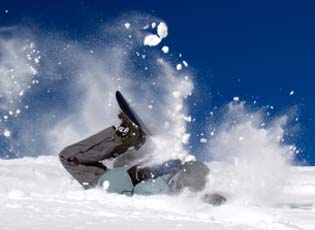 How successful are people at bike riding, swimming, skiing, or snowboarding when instead of getting formal instruction they just try to do what comes naturally? Perhaps they watch other people and decide for themselves what they should do. In most cases they fail miserably; however with proper instruction millions of people readily learn these popular skills. Too many of us are trying to live our lives, lead organizations, and even run the world, without instruction in the essential social skills of emotional competency. We can all benefit from skillful instruction. How successful are people at bike riding, swimming, skiing, or snowboarding when instead of getting formal instruction they just try to do what comes naturally? Perhaps they watch other people and decide for themselves what they should do. In most cases they fail miserably; however with proper instruction millions of people readily learn these popular skills. Too many of us are trying to live our lives, lead organizations, and even run the world, without instruction in the essential social skills of emotional competency. We can all benefit from skillful instruction.
Technology advances quickly. On December 17, 1903 the Wright Brothers demonstrated controlled powered flight for the first time. On July 20, 1969 Neil Armstrong and Edwin ‘Buzz’ Aldrin became the first humans to land on the Moon. Studying and applying the principles of flight led to this remarkable progress in only 66 years. On December 16, 1947 William Shockley, John Bardeen, and Walter Brattain succeeded in building the first practical point-contact transistor at Bell Labs. Today the tiny Apple iPOD Nano portable music player uses more than 64 billion transistors to store and play music. Understanding the principles of semiconductor physics allowed this remarkable progress in only 60 years. During a 1952 epidemic in the United States nearly 58,000 cases of polio were reported; of those 3,145 people died and 21,269 were left with mild to disabling paralysis. Yet the Americas were declared polio-free in 1994. By the year 2000 polio was officially eradicated in 36 Western Pacific countries, including China and Australia. Europe was declared polio-free in 2002. Understanding the mechanisms of polio infection and acting on that knowledge allowed this tremendous progress. Computers, automobiles, home electronics, photography, plastics, Internet, telephones, medicine, and many other technologies have progressed very rapidly over the past 100 years or so. Each of these technologies advanced rapidly once the principles that govern cause and effect in each discipline were discovered, studied, refined, and applied.
Unfortunately human relations have not made as much progress. In many developed countries, divorce rates increased markedly during the twentieth century. Genocide continues at a horrendous rate. More than 7,000 hate crimes occur each year in the United States. Depression rates in the United States have increased by a factor of ten over the past century. Anti depressants, mood stabilizers, anti-anxiety drugs, and other drugs used to modify moods or stabilize emotions are heavily used. Job satisfaction generally remains low. Road rage kills thousands each year. Stress, child abuse, spouse abuse, suicide, underage drinking, bullying, school shootings, violent crimes, street gangs, drug abuse, alcoholism, addictions, religious intolerance, terrorism, tyranny, oppression, war, and other destructive behavior continue to take their human toll year after year.
We do not have to tolerate emotional incompetency any longer. Learning and applying the principles of emotional competency can improve our emotional wellbeing. The need is both urgent and imperative. We can do this.
Quotations
- “Unresolved emotional pain is the great contagion of our time—of all time.” ~ Marc Ian Barasch

References:
Subcommittee on Surface Transportation and Infrastructure, US House of Representatives (Washington, DC), July 17, 1997. Testimony by Dr. Leon James, Professor of Traffic Psychology, University of Hawaii, Honolulu. http://www.drdriving.org/articles/testimony.htm
CourtTV.com Trials — Provides in-depth coverage of many criminal and civil trials.
The Business Case for Emotional Intelligence, TalentSmart
The Business Case for Emotional Intelligence, by Cary Cherniss, Ph.D.
The Missing Curriculum: Experience with Emotional Competence Education and Training for Premedical and Medical Students, by Loma K. Flowers, MD
References to Investigate:
A General Theory of Crime by Michael R. Gottfredson, Travis Hirschi
Youth Violence: a report from the Surgeon General

|
