You understand the dangers, you feel the fear, and you find the courage to do the right thing.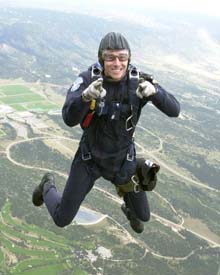 Strength and wisdom combine as you ward off temptation and act according to your values. Strength and wisdom combine as you ward off temptation and act according to your values.
Definitions
- Overcoming Fear
- Grace under pressure (attributed to Ernest Hemingway)
- Choosing self respect
- Wise endurance (attributed to Laches
 ) )
- Uncomplaining acceptance of unendurable conditions (attributed to Eisenhower)
- Doing right despite the fright
- Value-based action despite temptation.
A courageous person understands danger, and chooses to overcome their fear and proceed to face the danger and act according to their values. It is not fearlessness, recklessness, or rashness. It is a well considered, wise, and brave decision to behave constructively despite the fear, discomfort, or temptation. Courage is a strength drawn from a wise balance between the weaknesses of cowardice and recklessness. It is the discipline to act on wisely-chosen values rather than an impulse.
Because courage allows us to act on our values rather than our impulses, its virtue has long been recognized.
Related Terms
Synonyms for courage include: bravery, valor, resoluteness, boldness, spirit, daring, pluck, gallantry, intrepidity, confidence, self-reliance, fortitude, and heroism. It also includes patience, impulse control, perseverance, endurance, integrity, and discipline.
Courage allows for cunning, it may or may not include rashness, but it definitely excludes recklessness, thrill seeking, bullying, and stupidity.
Courage may be manifest as:
- Valor and bravery - Often called physical courage.
- Perseverance, industry, or diligence - often called endurance.
- Integrity, genuineness, or honesty - often called moral courage.
Each of these manifestations are described further below.
Manifestations of Courage
The fear of violent and painful death lies at the core of courage. In addition the fear of having to kill, the strength and perseverance required to endure prolonged hardships, and the agonizing and solitary decisions to risk ridicule and isolation to do the right thing are also important manifestations of courage. Each is described here in more detail.
Valor and Bravery—Physical Courage

Aristotle believed that the epitome of courage is facing noble death at the hands of the enemy during your offensive attack in a just war for the people. Demonstrating physical prowess, overcoming fear—especially fear of death, and launching an attack or an offensive effort are often considered the hallmarks of courage. Examples of physical courage are often drawn from military encounters such as the heroic acts recognized by the US Medal of Honor. This award recognizes members of the United States armed forces who distinguish themselves conspicuously by “gallantry and intrepidity at the risk of his[sic] life above and beyond the call of duty while engaged in an action against an enemy of the United States.”
Consider the courage of Private First Class Albert Schwab as just one of the more than 3,400 recipients of the medal of honor. On May 7, 1945 Pfc. Schwab was operating a flamethrower in World War II action against enemy Japanese forces on Okinawa Shima in the Rykuyu Islands. Quick to take action when his company was pinned down in a valley and suffered resultant heavy casualties under blanketing machinegun fire emanating from a high ridge to the front, Pfc. Schwab, unable to flank the enemy emplacement because of steep cliffs on either side, advanced up the face of the ridge in bold defiance of the intense barrage and, skillfully directing the fire of his flamethrower, quickly demolished the hostile gun position, thereby enabling his company to occupy the ridge. Suddenly a second enemy machinegun opened fire, killing and wounding several marines with its initial bursts. Estimating with split-second decision the tactical difficulties confronting his comrades, Pfc. Schwab elected to continue his one-man assault despite a diminished supply of fuel for his flamethrower. Cool and indomitable, he moved forward in the face of a direct concentration of hostile fire, relentlessly closed the enemy position and attacked. Although severely wounded by a final vicious blast from the enemy weapon, Pfc. Schwab had succeeded in destroying two highly strategic Japanese gun positions during a critical stage of the operation and, by his dauntless, single-handed efforts, had materially furthered the advance of his company. His aggressive initiative, outstanding valor and professional skill throughout the bitter conflict sustain and enhance the highest traditions of the U.S. Naval Service.
Perseverance, industry, and diligence—Wise Endurance
Sometimes the most difficult obstacles are fatigue, boredom, and other chronic stressors such as relentless bad weather, lack of food or shelter, disrespect, uncertainty, and other annoyances and difficulties. Enduring in the face of these obstacles requires courage. Bike Riders in the Race Across America set out on route of over 3000 miles, touching 14 states and climbing over 100,000 feet. Solo racers finish in 9 to 12 days, averaging 250 to 350 miles per day. In RAAM, once the clock starts on the west coast, it doesn't stop until each racer reaches the finish line on the east coast. Racers ride about 22 hours each day and get almost no sleep. In 1986 Pete Penseyres completed the 3107 miles in under 8 days and 10 hours.
In a similar test of endurance, the Leadville Trail 100-mile run awards a hand-crafted gold and silver belt buckle to the runners who complete the course in under 25 hours. These amazing racers are enduring remarkable hardships for the sake of their own pride; the material awards are trivial, and these races don't specifically improve the wellbeing of others. But courageous people sometimes endure hardship to help others.
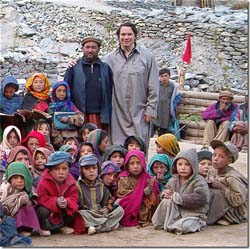 The book Three Cups of Tea tells the courageous story of Greg Mortenson's perseverance to keep his promise and provide a school for girls in a small Pakistani village. Dangerously ill when he finished his failed climb of K2 mountain in 1993, Greg Mortenson was sheltered for seven weeks by the villagers of Korphe. In return, he promised to build the impoverished town's first school, a project that grew into the Central Asia Institute, which has since constructed more than 150 schools across rural Pakistan and Afghanistan. Keeping his promise required Mortenson to sleep in his car for a year to help save money for the project; survive an eight-day-long armed 1996 kidnapping in the tribal areas of Waziristan in Pakistan's North-West Frontier Province; escape a 2003 firefight between Afghan opium warlords; endure two fatwas by Islamic clerics angry at him for educating girls; and tolerate hate mail and threats from fellow Americans opposed to him helping educate Muslim children. The book Three Cups of Tea tells the courageous story of Greg Mortenson's perseverance to keep his promise and provide a school for girls in a small Pakistani village. Dangerously ill when he finished his failed climb of K2 mountain in 1993, Greg Mortenson was sheltered for seven weeks by the villagers of Korphe. In return, he promised to build the impoverished town's first school, a project that grew into the Central Asia Institute, which has since constructed more than 150 schools across rural Pakistan and Afghanistan. Keeping his promise required Mortenson to sleep in his car for a year to help save money for the project; survive an eight-day-long armed 1996 kidnapping in the tribal areas of Waziristan in Pakistan's North-West Frontier Province; escape a 2003 firefight between Afghan opium warlords; endure two fatwas by Islamic clerics angry at him for educating girls; and tolerate hate mail and threats from fellow Americans opposed to him helping educate Muslim children.
Ordinary people also courageously persevere over fatigue, temptation, and hardship to benefit others. The single mother who gets her children dressed for school each day before she goes to work herself, the unskilled worker who endures a low-paying, demeaning, and exhausting job to earn the money to send his children off to college, and the alcoholic who never indulges in a drink are all choosing to do the right thing despite the hardships.
Enduring Disgust
Parents change the messy diapers of their infant children, nurses empty bedpans, proctologists routinely perform colonoscopies, veterinarians insert their entire arm into the birth canal of large animals, and other courageous people overcome disgusting challenges to fulfill their duty and serve others.
Integrity, genuineness, and honesty—Moral Courage
 Can firm minds and souls be as courageous as firm arms and legs? In the nineteenth century Henry Sidgwick first defined moral courage as: “facing the pains and dangers of social disapproval in the performance of what they believe to be duty.” The moral hero often overcomes shame and humiliation, rejects conformity, risks ostracism, jeopardizes career and status, and sets out alone to take an unpopular stand and do the right thing. Moral courage is choosing to risk embarrassment rather than tolerate injustice. Can firm minds and souls be as courageous as firm arms and legs? In the nineteenth century Henry Sidgwick first defined moral courage as: “facing the pains and dangers of social disapproval in the performance of what they believe to be duty.” The moral hero often overcomes shame and humiliation, rejects conformity, risks ostracism, jeopardizes career and status, and sets out alone to take an unpopular stand and do the right thing. Moral courage is choosing to risk embarrassment rather than tolerate injustice.
Rielle Miller describes these five essential elements of moral courage:
- Presence and recognition of a moral situation—I realize I am now facing a moral choice,
- Moral choice—I must draw on my values, decide what is most important to me, and do the right thing,
- Behavior—I must act to carry out the moral decision,
- Individuality—I am stepping away from the group and taking personal responsibility for this action, and
- Fear—I know the risks; I can face the fear and overcome it.
While physical courage is inevitably defeated by fatigue or age, moral courage can be strengthened by repeated use. Moral courage allows people to act on their moral duty despite real threats of physical harm, arrest, isolation, ridicule, and banishment. Here are some prominent examples.
Women's suffrage activist Emmeline Pankhurst was arrested seven times before women gained the right to vote in the United States. During her trial in 1908, she told the court: “We are here not because we are law-breakers; we are here in our efforts to become law-makers.”
Mohandas Gandhi led campaigns throughout India to ease poverty, expand women's rights, build religious and ethnic amity, end untouchability, and increase economic self-reliance. Above all, he aimed to achieve Swaraj or the independence of India from foreign domination. He ate simple vegetarian food and also undertook long fasts as a means of both self-purification and social protest. Gandhi spent a number of years in jail in both South Africa and India. On August 15, 1947 India became a free republic. On January 30, 1948, Gandhi was shot while he was walking to a platform from which he was to address a prayer meeting.
On December 1, 1955 in Montgomery, Alabama, Rosa Parks, age 42, refused to obey bus driver James Blake's order that she give up her seat to make room for a white passenger. She was arrested and unlike previous individual actions of civil disobedience, Parks' action sparked the Montgomery Bus Boycott. After her arrest, Parks became an icon of the Civil Rights Movement but suffered hardships as a result. She lost her job, and her husband quit his job after his boss forbade him to talk about his wife or the legal case. The U.S. Congress later called her the “Mother of the Modern-Day Civil Rights Movement.”
On 11 June 1963 Buddhist monk Thích Quảng Đức burned himself to death at a busy intersection on the road outside the Cambodian embassy in Saigon to protest the persecution of Buddhists by South Vietnam's Ngô Đình Diệm administration. As he burned he never moved a muscle, never uttered a sound, his outward composure was in sharp contrast to the wailing people around him. When U.S. President John F. Kennedy saw the photograph of the self-immolation he said “no news picture in history has generated so much emotion around the world as that one.”
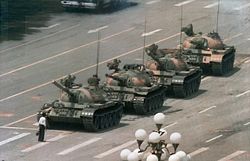
The moral courage of Dr. Martin Luther King, Jr., Nelson Mandela, and the “tank man” who stopped a line of tanks during the Tiananmen Square protests of 1989 are all legendary. Three whistle blowers, Cynthia Cooper, Coleen Rowley, and Sherron Watkins were selected as the Time Magazine persons of the year in 2002.
Without risking imprisonment or making headlines, you can exercise moral courage every day by being impeccable with your word, doing your best, acting on your well-chosen values, and refusing the temptation to comply with, assist with, or ignore: dishonest, unfair, coercive, cruel, wasteful, or deceptive practices encountered during your everyday activities.
Courageous Women
Proving his courage was the rite of passage into manhood in many cultures. Accusing a man of being a sissy is a powerful and humiliating insult. What space does this leave for women in the territory of courage? In many cultures while valor was central to being a man, chastity was central to being a virtuous woman. Furthermore, if the men were courageous enough to defend women from unwanted advances, their woman would be chaste.
More recently, however, women are respected for displaying physical courage. In addition to the many courageous women already mentioned, Dr. Mary E. Walker was awarded the Congressional Medal of Honor for her role as a Contract Acting Assistant Surgeon at the Battle of Bull Run, July 21, 1861. Valentina Tereshkova was selected to pilot the Vostok 6 spacecraft on 16 June 1963 and become the first woman to fly in space. Women have served as fighter pilots in the United States since 1993. In 2006, seven women broke into one of Pakistan’s most exclusive male clubs to graduate as fighter pilots. Maj. Nicole Malachowski is the first woman pilot on the U.S. Air Force Thunderbirds demonstration team. Her first public performance was in March 2006 and she spent the 2006 and 2007 air show seasons flying the Number 3 (Right Wing) aircraft in the diamond formation.
Commitment
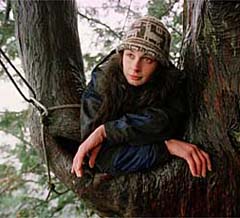 In June 1997 Julia Hill toured California’s “Lost Coast” and fell in love with the ancient giant redwood trees growing there. She sold her belongings, left home, and committed herself to doing whatever she could to preserve these magnificent trees. Almost by chance she was invited to climb and sit-in a 1,000 year old redwood in Humbold County, California. The tree was named “Luna” by the Earth First! environmental action group that was protecting it from Pacific Lumber loggers who were clear cutting the area. On December 10, 1997 in an act of moral courage she chose the name “Butterfly”, climbed 180 feet up into the tree and stayed there with other activists. Soon the others left and she became the lone activist living in the tree to protect it. The stakes were high, her sit-in was costing Pacific Lumber enormous sums of money while living high in a tree is difficult, uncomfortable, and dangerous. Her physical courage soon became apparent when the loggers hovered a huge twin-rotor helicopter directly overhead in an illegal attempt to force her from the tree. She overcame her terror, held on, and then worked with the FAA to get future close encounters banned. Her endurance was tested everyday for the two years she remained in the tree through cold winters, high winds, many disappointments, and loneliness. Her commitment was manifest in each of the three styles of courage on each of the 738 days she remained in the tree. An agreement to protect the tree was eventually signed and 25-year old Julia Butterfly returned triumphantly to the ground on December 18, 1999. In June 1997 Julia Hill toured California’s “Lost Coast” and fell in love with the ancient giant redwood trees growing there. She sold her belongings, left home, and committed herself to doing whatever she could to preserve these magnificent trees. Almost by chance she was invited to climb and sit-in a 1,000 year old redwood in Humbold County, California. The tree was named “Luna” by the Earth First! environmental action group that was protecting it from Pacific Lumber loggers who were clear cutting the area. On December 10, 1997 in an act of moral courage she chose the name “Butterfly”, climbed 180 feet up into the tree and stayed there with other activists. Soon the others left and she became the lone activist living in the tree to protect it. The stakes were high, her sit-in was costing Pacific Lumber enormous sums of money while living high in a tree is difficult, uncomfortable, and dangerous. Her physical courage soon became apparent when the loggers hovered a huge twin-rotor helicopter directly overhead in an illegal attempt to force her from the tree. She overcame her terror, held on, and then worked with the FAA to get future close encounters banned. Her endurance was tested everyday for the two years she remained in the tree through cold winters, high winds, many disappointments, and loneliness. Her commitment was manifest in each of the three styles of courage on each of the 738 days she remained in the tree. An agreement to protect the tree was eventually signed and 25-year old Julia Butterfly returned triumphantly to the ground on December 18, 1999.
Semblances of Courage
Aristotle was a stickler when it came to acknowledging courage. He felt that for an action to demonstrate courage it had to be pursued as its own virtue rather than to avoid the negative consequences of shame, ostracization, disgrace or other consequences. Furthermore, courage required “deliberate choice and purpose.”
He lists these five specific semblances of courage are actions based on:
- Fear of Shame or the desire for honor (which he calls civic courage)—not desiring courage for the sake of its own virtue.
- Experience or skill in facing the particular danger—Is the sword swallower in the circus truly courageous, or a highly skilled performer taking only modest risks?
- Spirit, fury, or rage (although these lack reason they may be helpful accessories to true courage)
- optimism about the chances of succeeding and avoiding the danger
- ignorance of the danger.
Aristotle felt that some aspect of wisdom—the ability to deliberate, decide, and then act—is absent from each. These are described in more detail below.
Fear of Shame
If you were all alone, and could back out of the confrontation unseen, would you still proceed with the courageous deed? If the answer is “yes”, then you are acting to avoid shame rather than to achieve the virtue of courage. Because of this distinction Aristotle considers acting to avoid shame a semblance of courage rather than genuine courage. One example is accepting an arbitrary dare rather than having the courage to refuse the pointless challenge.
Experience in facing the particular danger
Circus performers, paratroopers, sky diving instructors, firefighters, mineworkers, mariners, aviators, police officers, military, and many others face real dangers—existential threats—every day. These professionals are experts at what they do, and their skill reduces the danger of each encounter to a manageable and often acceptable levels. Their increased skill results in decreased danger and less fear at each encounter. However, the endurance these professionals demonstrate in regularly facing risk demonstrates their courage.
Rashness
Aristotle defines rashness as a manifestation of overconfidence, not as a result of fearlessness. Teenage games of “chicken” are foolish, not courageous, regardless of the age of the participants. Ignorance may be bliss, but it is not courage.
Bungee jumping, skydiving, running with the bulls, and even riding the roller coaster are forms of thrill seeking. If these are inherently safe, then they are simply high profile forms of fun. However, if an unnecessary risk is taken, such as unprotected sex, unsafe driving; abusing drugs, tobacco, or alcohol; or careless use of guns or knives, the behavior is reckless, not courageous.
Rashness includes stupidity, stubbornness, rage, haste, unnecessary risks, and ignorance including: unfounded optimism, lack of awareness of the dangers, and taking risks to pursue an unworthy goal.
Imposters
Bullies and brutes exploit a substantial power advantage to cruelly harass or attack weaker victims. Because of the power differential they have nothing to fear; they are demonstrating cowardliness rather than courage.
Bluffs are more subtle. For a threat to be effective the threatened person has to believe the person making the threat has the ability and courage to carry out the threat. Credibility of a threat may be the best measure of perceived courage.
Spoilers
Courage does not tolerate whining. Criticize if you must, but never ever whine. Whiners are playing the victim and acting like they have no choices, no responsibility, and certainly no courage. If you must complain, restrict your complaints to the tyrant abusing power or the well-recognized enemy causing the problems. Also, don't be a jerk—have the courage to overlook annoyances and the courtesy not to become annoying yourself.
Conditions for Courage
Balancing Fear and Confidence
Differentiating courage from cowardice or rashness requires examining a balance between fear and confidence. Fear is the well-known emotion related to our assessment of possible loss or other danger. In this context, confidence refers to both: 1) the belief that I have the skills to persevere, overcome the obstacles, and attain the goal, and 2) I believe the cause is worthy. Assessing fear requires estimating the dangers that lie ahead. Assessing confidence requires estimating: 1) our own capabilities, and 2) the worthiness of the goal. Each of these estimates will be inherently subjective, approximate, uncertain, and error prone. Inevitably the assessments may be accurate, inappropriately high, or inappropriate low. Courage is the decision to act based on an accurate assessment of both the dangers and confidence level. The courageous person has an accurate estimate of the dangers, feels the fear, and uses their accurate assessment of confidence in their own abilities and of the worthiness of the goal to move foreword and persevere. Rashness describes deciding to encounter danger based on overconfidence; an inappropriately high confidence. Cowardice is deciding not to act based on unfounded fears. If both fears and confidence are estimated as inappropriately low, ambivalence results and action is delayed, perhaps indefinitely. If both fears and confidence are low, the person has probably checked out, become apathetic, is paralyzed by learned helplessness, and declining to act. The possible configurations of fear and confidence are summarized in the table below:
|
Inappropriately
Low Fear |
Appropriate Fear |
Inappropriately
High Fear |
Inappropriately
Low Confidence |
Resigned, apathetic, helpless |
Ambivalence |
Cowardice |
| Appropriate Confidence |
Rashness |
Courage |
Cowardice |
Inappropriately
High Confidence |
Rashness |
Rashness |
Rashness |
Personal Characteristics
Is courage a characteristic of the person or of the event? Must a person be brave on all occasions to be considered a brave person, or is one heroic deed sufficient to identify a hero? If it exists at all, what characterizes the courageous disposition?
If you believe their threat, then you probably judge them to be a courageous person, because who would believe a threat made by a coward? A threat is most successful if it never has to be carried out.
Heroes are not thrill seekers; in one study [Levenson, 1990] they scored significantly lower than other risk takers (e.g. rock climbers and drug rehabilitation unit residents) on measurements of general sensation seeking and experience seeking.
The relative rank of Harris sparrows is conspicuously marked by a patch of dark plumage on the breast and head. Experimenters painted the feathers of low-status birds to provide them with this badge of courage. Faking it, however, did not work. These counterfeits did not advance in the dominance hierarchy until they were injected with testosterone and genuinely became stronger and more aggressive. Birds injected with the testosterone but without the plumage were also ignored. Only the birds that looked tough and were tough gained the respect of the other birds and were able to make their threats believable.
Confidence—believing in your own capabilities
The more you sincerely believe you are capable of meeting the challenge the more relentless you will be in meeting, persevering, and overcoming that challenge. Self-efficacy—your estimate of your own ability to handle a challenge—is an essential characteristic that predicts how much effort you will exert and how long you will persevere to overcome obstacles and meet your goal.
Prior success with similar challenges and an accurate assessment of your own strengths combine to increase your confidence. Consciously recognizing your successful record in overcoming similar challenges, and explicitly listing and reminding yourself of the strengths you bring to the task can increase your confidence and improve your chances for success.
Gaining experience in successfully facing and overcoming risks also increases your confidence. Gradually taking risks that are just beyond your comfort zone, feeling the fear, staying in control, and persisting on to a successful outcome is an effective way to practice courage. Exhilaration often lies just beyond the fear; learn to enjoy getting there. Sports such as rock climbing, hang gliding, ski jumping, sky diving, motocross, freestyle skiing, mountain biking, open water swimming, surfing, kayaking, and other adventure activities can provide this experience.
Repeatedly having the confidence to apply your competence to increasingly difficult tasks, and succeeding most of the time, will strengthen your courage. Seeing others succeed at similar tasks also builds confidence.
Encouragement in the form of genuine praise, highlighting strengths, and belonging to a group or community can also boost confidence. Being cheered on can help if it is a genuine recognition and celebration of your strengths, capabilities, and contributions. This must not be overdone however, because courage requires an accurate estimate of capabilities so they can be steadily maintained throughout the struggle as the dangers and difficulties are actually encountered.
Will—Perceiving a worthy purpose
Feeling a sense of purpose increases your commitment to overcoming fear and acting with courage. Recognizing your important contribution to a community can often provide this purpose.
Courageous Disposition—Overcoming Fear
The worst fears are those that you have no control over. Gaining control via increasing confidence, competence, and experience helps to reduce fears. Courage does not come from banishing fear, but through overcoming it enough to act. Courage requires conquering fear, not eliminating or ignoring it.
Character
Experience
Professional daredevil Spanky Spangler has performed more than 22,000 stunts and holds 23 danger-related world records. He often jumps from a platform or hot air balloon more 150 feet in the air and free-falls onto an air bag on the ground. He says: “I do stunts for the love of it, not for the records.” His longevity is testimony to his skill, experience, and careful preparations.
Skill and Practicing bravery (circus performers, paratroopers, fire fighters...)
Honor Cultures
“Death before dishonor” is the rallying cry of many honor cultures, including many military organizations, World War II Japan, and perhaps the Mafia and street gangs.
Courage is almost as contagious as fear. There is comfort, if not safety in numbers, especially when there is someone you can literally lean on.
Death before dishonor, avenging the wrongs, adolescence, street gangs, WWII Japan, Military
Events and Opportunities for Demonstrating Courage
Situational Imperative
Threat, fear, risk assessment, "Critical Distance" (can this hurt me, can I prevail?), physical condition, value of the goal.
Fight = courage or rashness, Flight = cowardice or prudence.
Heroes often say that they were able to act courageously simply because they saw what had to be done.
When both engines failed on US Airways Flight 1549 shortly after taking off from LaGuardia Airport on the afternoon of January 15, 2009, Captain Chesley Sullenberger faced an urgent and essential choice; he could demonstrate grace under immense pressure, or 155 people would die. He immediately applied his decades of experience and skill and safely landed the plane in the Hudson river. After he checked the passenger cabin twice to make sure everyone had evacuated he retrieved the plane's maintenance logbook and was the last to evacuate the aircraft.
The situation revealed his latent courage as a quietly competent man became a celebrated hero.
Opposing Injustice—Anger
Tuskegee airmen, burning monks, Rosa parks and other "moral courage" examples.
Noble and Ignoble Values
Are suicide bombers courageous? According to Aristotle: “It is for the sake of what is noble that the courageous faces and does all that courage demands.” In other words, unless the cause is noble the act cannot be courageous, regardless of the dangers or other difficulties that have been overcome. Courage demands upholding a value that goes beyond self-interest. Similarly, “in the Laches Socrates and his interlocutors have determined that physical acts without the knowledge of good and bad (morality) can never be courage.” [Moral Courage:] These ancient Greeks were clear: courage loses its virtue, regardless of the resolve that may have been required, when it is squandered on an ignoble cause.
But both Plato and Aristotle defined courage in the context of battlefield courage—a warrior's victory in battle. The nobility of the war itself was never brought into question. However, from the vantage point of wisdom or simply human rights, the virtue of war is always doubtful.
Marksmanship is a valuable skill that is morally neutral. The marksman may be practicing at a rifle range, engaged in battle, committing a crime, or protecting us from predators or assassins. Resolve is similar to marksmanship in this respect; both are morally neutral. However, the word courage is reserved for those occasions when resolve advances a constructive end.
The Moments of Truth
Defining moments in our lives, and every day. Don't accept bribes, cheat on your taxes, or pad your expense vouchers. Also, overcoming or at least controlling addictions is courageous.
Quotations:
- “Courage is not the absence of fear, but rather the judgment that something else is more important than fear.” ~ Ambrose Redmoon
- “One man with courage makes a majority.” ~ Andrew Jackson
- “Courage doesn't always roar. Sometimes courage is the quiet voice at the end of the day saying, ‘I will try again tomorrow.’” ~ Mary Anne Radmacher
- “Courage is the price that life extracts for granting peace.” ~ Amelia Earhart
- “Courage is a special kind of know-how. It’s knowing how to fear what ought to be feared and how not to fear what ought not be feared.” ~ David ben Gurion
- “Courage is not simply one of the virtues, but the form of every virtue at the testing point.” ~ C.S. Lewis
- “Many would be cowards if they had courage enough.” ~ Thomas Fuller
- “I'd rather be brave than almost anything. How does that strike you?” ~ Johansen
- “There is very little distinction between the boast and the vow.” ~ William Ian Miller
- “Great spirits have always found violent opposition from mediocrities. The latter cannot understand it when a man does not thoughtlessly submit to hereditary prejudices but honestly and courageously uses his intelligence.” ~ Albert Einstein
- “Vulnerability is our most accurate measurement of courage.” ~ Brené Brown
References:
The Mystery of Courage , by William Ian Miller , by William Ian Miller
Find Your Courage: 12 Acts for Becoming Fearless at Work and in Life , by Margie Warrell , by Margie Warrell
Do Unto Others: Extraordinary Acts Of Ordinary People , by Samuel P Oliner , by Samuel P Oliner
Strength in What Remains , by Tracy Kidder , by Tracy Kidder
Three Cups of Tea, by Greg Mortenson
Rudy—A movie portrayal of remarkable perseverance.
The Carnegie Hero Fund Commission
Profiles in Courage , by John F. Kennedy , by John F. Kennedy
Profiles In Courage For Our Time , by Caroline Kennedy , by Caroline Kennedy
The Legacy of Luna: The Story of a Tree, a Woman and the Struggle to Save the Redwoods , by Julia Hill , by Julia Hill
Courage: Its nature and Development, by Nelson H. Goud, Journal of Humanistic Counseling, Education and Development, Spring 2005, Volume 44.
The Anatomy of Courage, by David Pears, Social Research, Volume 71, Number 1, Spring 2004.
Courage as a Virtue, George Kateb, Social Research, Volume 71, Number 1, Spring 2004.
The Emotions of Courage, by Daniel Putman, Journal of Social Philosophy, Volume 32, Number 4. Winter 2001.
Moral Courage: Definition and Development, Rielle Miller, March 2005, Ethics Resource Center
Laches, or Courage, by Plato, 380 B.C.E.
Risk Taking and Personality, Michael R. Levenson, Journal of Personality and Social Psychology 1990, Vol. 58, No. 6, 1073-1080
Hardiness and the Concept of Courage, Cooper R. Woodard, Summer 2004, Consulting Psychology Journal: Practice and Research
|

